UPES B.Tech Admissions 2026
Last Date to Apply: 18th May | Ranked #43 among Engineering colleges in India by NIRF | Highest Package 1.3 CR , 100% Placements



BITSAT Formulas for PCM: BITSAT is a crucial exam for every student who wishes to join the top private engineering college in India - BITS Pilani. The exam is held in two sessions. Session 1 is scheduled from 15 to 17 April, and Session 2 is from 24 to 26 May 2026. It is considered a moderate to difficult exam, inclined more on the difficult side. To properly prepare for the BITS Admission Test (BITSAT), one needs to understand concepts thoroughly, along with having a good command of formulas. The exam encompasses three significant subjects - Physics, Chemistry, and Mathematics (PCM) - each one overflowing with key formulas you must remember and use promptly. Within this article, we’ll simplify a few of the BITSAT formulas for Physics, Chemistry, and Maths to help you optimize your study efforts for the BITSAT 2026 exam. Let's dive in!
This Story also Contains

The BITSAT examination is famed for its fast and rapid format. During the 180-minute exam, you have to answer 150 multiple-choice questions, giving you very little time to calculate formulas during the test. Remembering major formulas can cut down on precious time, raise accuracy, and help you compete effectively. There exists a unique collection of equations for each subject that allows for fast problem resolution, allowing you to concentrate more on understanding their application. We should analyse the important formulas for each area.
Also Read:
Get expert advice on college selection, admission chances, and career path in a personalized counselling session.
Physics in BITSAT is heavy on numerical problems, requiring a good grasp of formulas. Understanding these formulas will help you solve problems on topics like Mechanics, Electricity, Magnetism, and Optics. Here are some important BITSAT Physics formulas:
Newton’s Second Law:
Newton’s second law of motion:-
It states that the acceleration of the particle measured from an inertial frame is given by the (vector) sum of all the forces acting on the particle divided by its mass (only when mass is constant), i.e.,
$\vec{a}=\frac{\vec{F}}{m} \Rightarrow \vec{F}=m \vec{a}$
2.To cross river in the shortest path
condition ( velocity of boat along river flow must be zero)
$\begin{aligned} & t=\frac{d}{\sqrt{v^2-u^2}} \\ & d={ }_{\text {width of fiver }} \\ & \mathrm{v} \text { = Speed of Baat w.r.t river } \\ & \mathrm{u}=\text { speed of river } \\ & \text { 3. } W=F S \cos \Theta\end{aligned}$
Ohm’s Law:
In a conductor, if all external physical conditions like temperature and pressure are kept constant the Current flowing through a conductor is directly proportional to the Potential difference across the two ends.
$\begin{aligned} & V \propto I \\ & V=I R \\ & R-\text { Electric Resistance }\end{aligned}$
The graph between V and I
India's Largest University | NAAC A++ | 100% Placements Record | Highest CTC 2.5 Cr PA | 150 + Programmes across Multiple Disciplines | Last date: 15th May, 2026!
B.Sc Aviation Admissions 2026 | HIET has trained over 42,000 persons as engineers and technicians | MOU signed with AIR INDIA ENGINEERING SERVICES LIMITED (AIESL)
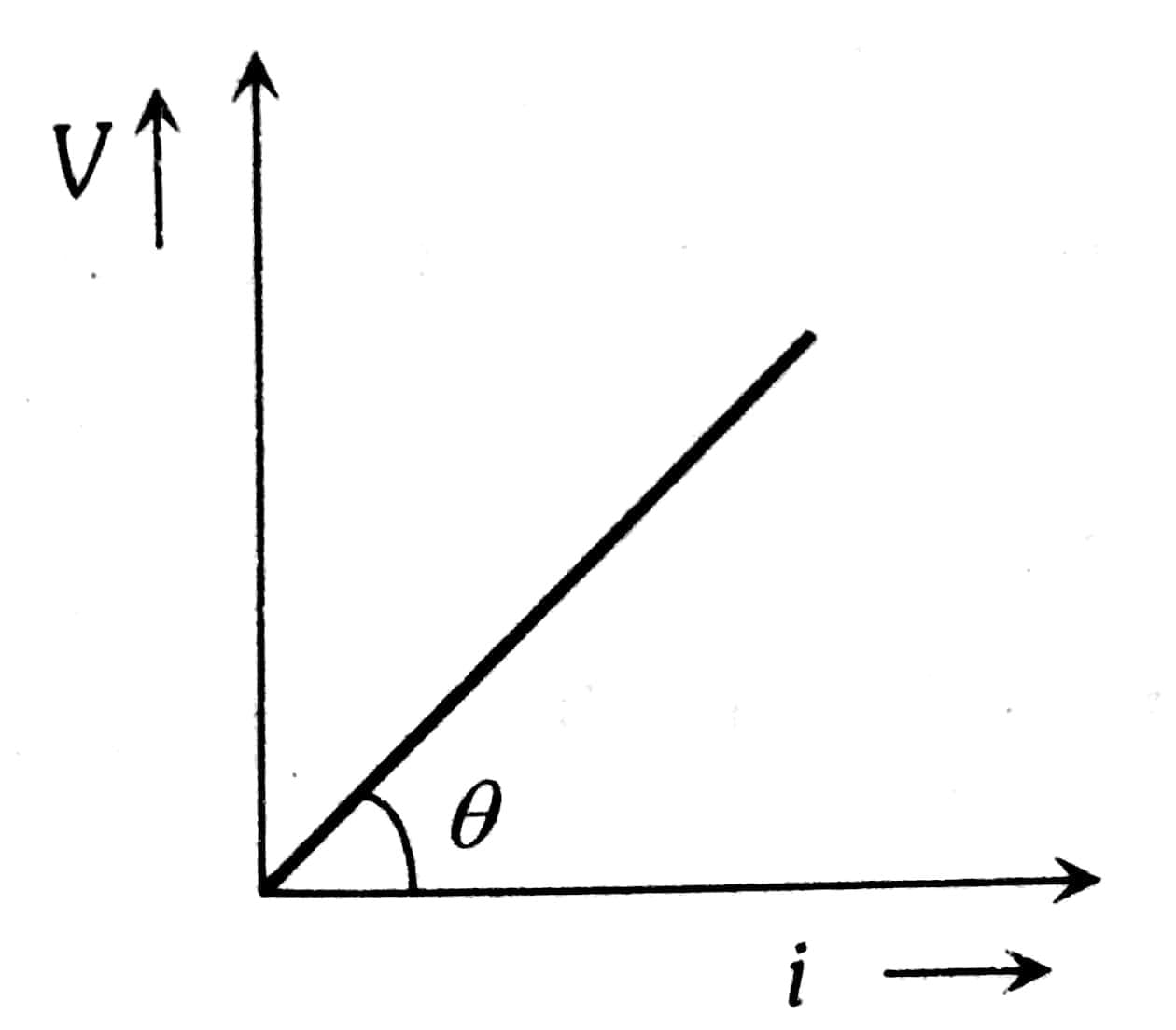
The slope gives the resistance
The graph between V and I at different temperatures
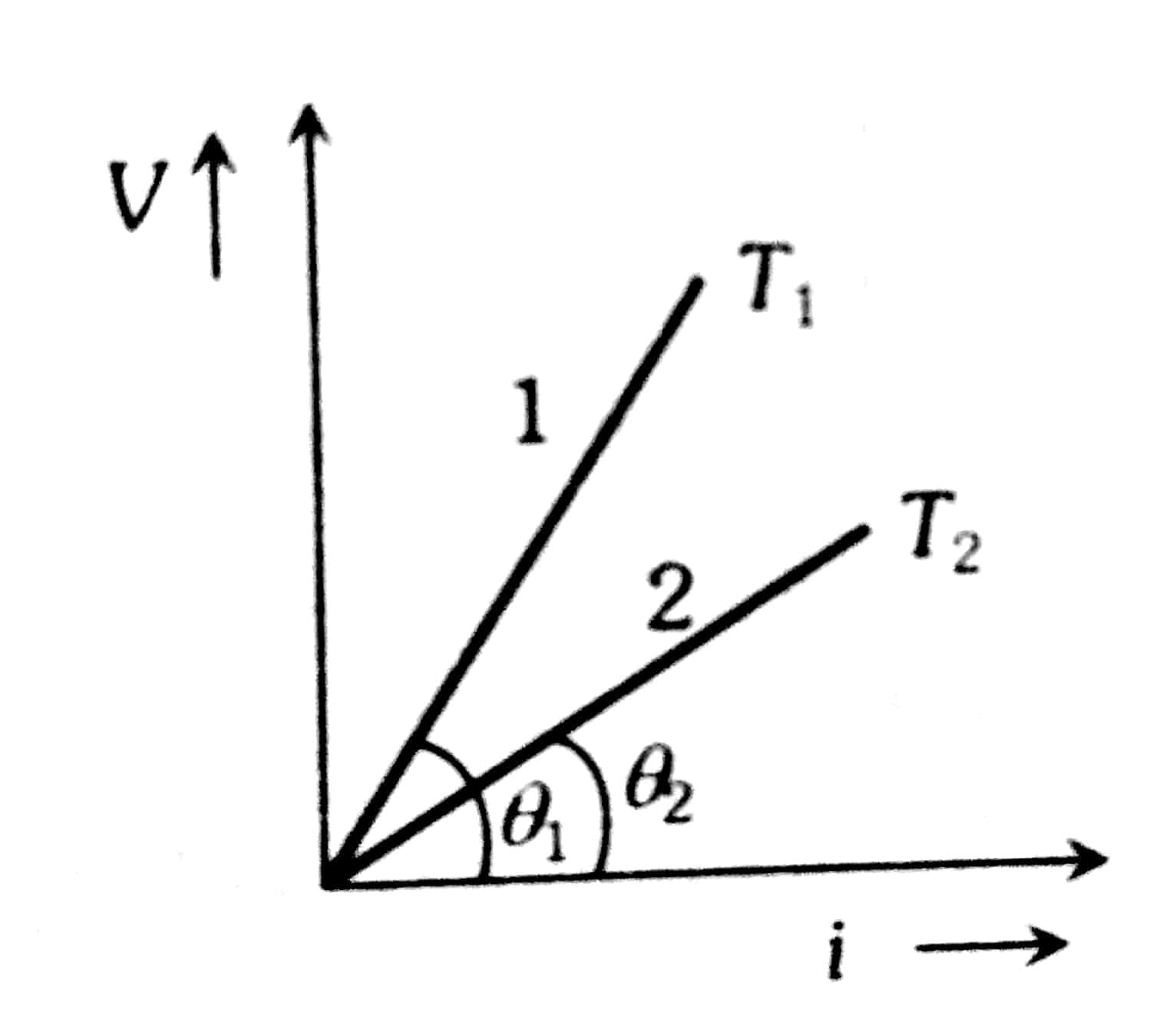
Here T1>T2. The resistance of a conductor increases with increase in temperature
Kinematic Equations: For uniform acceleration:
Equation of motions | There are three equations of motion
Formula $V=u+a t$ V = Final velocity u = Initial velocity A = acceleration T = time
Formula $$ $s \rightarrow$ Displacement
Formula $V^2-u^2=2 a s$
$$
|
the Net electric field is -
$$
E_{n e t}=\left(\frac{1}{4 \pi \varepsilon_0}\right) \frac{x Q}{\left(x^2+R^2\right)^{3 / 2}}
$$
Lens Formula:
$\frac{1}{v}-\frac{1}{u}=\frac{1}{f}$
(f is the focal length, v is the image distance, and u is the object distance)
Chemical formulas are of great significance in BITSAT; most of the numerical problems in Physical Chemistry will either make or mar your performance. Chemistry and both Inorganic and Organic Chemistry in particular will also test you on some principles and reaction mechanisms. Here are some BITSAT Chemistry formulas that will come in handy:
Ideal Gas Equation:
$P V=n R T$
Pressure × Volume = number of moles × Gas constant × Temperature
Graham’s Law of Diffusion
According to it "At constant temperature and pressure, the rate of diffusion of a gas is inversely proportional to the square root of its density or molecular weight". It is applicable only at low pressure.
$\mathrm{r} \propto \frac{1}{\sqrt{\mathrm{M}}}$ or $\frac{1}{\sqrt{\mathrm{~d}}}$
Here r = rate of diffusion or effusion of a gas or liquid. M and d are the molecular weight and density, respectively.
For any two gases, the ratio of the rate of diffusion at constant pressure and temperature can be shown as
$\mathrm{r}_1 / \mathrm{r}_2=\sqrt{\mathrm{M}_2 / \mathrm{M}_1}$ or $\sqrt{\mathrm{d}_2 / \mathrm{d}_1}$
Hence, diffusion or effusion of a gas or gaseous mixture is directly proportional to the pressure difference of the two sides and is inversely proportional to the square root of the gas or mixture effusing or diffusing out.
Some Other Relation Based on Graham’s law
As r = V/t = Volume/time, thus:
$\begin{aligned} & \frac{\mathrm{V}_1 \mathrm{t}_2}{\mathrm{~V}_2 \mathrm{t}_1}=\sqrt{\mathrm{M}_2 / \mathrm{M}_1} \\ & \text { As } \mathrm{r}=\frac{\mathrm{n}}{\mathrm{t}}=\frac{\mathrm{d}}{\mathrm{t}}=\frac{\mathrm{w}}{\mathrm{t}} \\ & \text { Thus, } \frac{\mathrm{n}_1 \mathrm{t}_2}{\mathrm{n}_2 \mathrm{t}_1}=\sqrt{\mathrm{M}_2 / \mathrm{M}_1} \\ & \frac{\mathrm{w}_1 \mathrm{t}_2}{\mathrm{w}_2 \mathrm{t}_1}=\sqrt{\mathrm{M}_2 / \mathrm{M}_1} \\ & \frac{\mathrm{~d}_1 \mathrm{t}_2}{\mathrm{~d}_2 \mathrm{t}_1}=\sqrt{\mathrm{M}_2 / \mathrm{M}_1}\end{aligned}$
Arrhenius Equation:
We know that the first-order equation is given as follows:
$\log _{10} \mathrm{~A}=\log _{10} \mathrm{~A}_{\circ}-\frac{\mathrm{kt}}{2.303}$
But there are other forms of rate law also available that we use for different purposes. These forms are mentioned below:
Use to solve numericals:
$\begin{aligned} & \log _{10} \mathrm{~A}=\log _{10} \mathrm{~A}_{\mathrm{o}}-\frac{\mathrm{kt}}{2.303} \\ & \Rightarrow \log _{10}\left[\frac{\mathrm{~A}_{\mathrm{o}}}{\mathrm{A}}\right]=\frac{\mathrm{kt}}{2.303} \\ & \text { Thus, } \mathrm{t}=\frac{2.303}{\mathrm{k}} \log _{10}\left[\frac{\mathrm{~A}_{\mathrm{o}}}{\mathrm{A}}\right]\end{aligned}$
Exponential form:
$\begin{aligned} & \log _{\mathrm{e}} \mathrm{A}-\log _{\mathrm{e}} \mathrm{A}_{\mathrm{o}}-\mathrm{kt} \\ & \Rightarrow \log \frac{\mathrm{A}}{\mathrm{A}_{\mathrm{o}}}=-\mathrm{kt} \\ & \Rightarrow \frac{\mathrm{A}}{\mathrm{A}_{\mathrm{o}}}=\mathrm{e}^{-\mathrm{kt}} \\ & \text { Thus, } \mathrm{A}=\mathrm{A}_{\mathrm{o}} \mathrm{e}^{-\mathrm{kt}}\end{aligned}$
This equation is also known as the exponential form.
The rate constant is shown by this formula: Rate constant = Frequency factor × Exponential factor related to activation energy
Boyle’s Law:
Boyle's law may be expressed mathematically as
$\mathrm{P} \propto \frac{1}{\mathrm{~V}},($ at constant T and n$)$
or $\mathrm{V} \propto \frac{1}{\mathrm{P}}$, (at constant T and n )
Where,
$\mathrm{T}=$ temperature, $\mathrm{P}=$ pressure of the gas
$\mathrm{n}=$ number of moles of a gas and $\mathrm{V}=$ volume of the gas
$\Rightarrow \mathrm{V}=\mathrm{k}_1 \frac{1}{\mathrm{P}}$
k1 is the proportionality constant whose value depends upon the following factors.
$\begin{aligned} & \mathrm{P}_1 \mathrm{~V}_1=\mathrm{P}_2 \mathrm{~V}_2=\text { constant } \\ & \text { or } \quad \frac{P_1}{P_2}=\frac{V_2}{V_1}\end{aligned}$
Pressure and volume are direct and opposite ratio with temperature remaining constant, that is pressure is inversely proportional to volume of the gas.
Molarity Formula:
Molarity (M) is defined as the number of moles of solute dissolved in one litre (or one cubic decimetre) of solution,
Molarity $=\frac{\text { Moles of solute }}{\text { Volume of solution in litre }}$
First Law of Thermodynamics:
Heat supplied = Work done by the system + Increase in internal energy
So increase in internal energy = Heat supplied - work done by the system
$\Delta=q+w$ [Since, work done by the system is -w]
Nernst Equation:
At T = 298K, the Nernst equation is given as follows:
$\mathrm{E}_{\text {cell }}=\mathrm{E}_{\text {cell }}^{\mathrm{o}}-\frac{0.059}{\mathrm{n}} \log _{10} \mathrm{Q}$
where n is the number of electrons exchanged.
Thus the Nernst equation for the full cell is given as follows:
$\mathrm{E}_{\text {cell }}=(P-Q)-\frac{0.059}{x} \log _{10} \frac{c_1}{c_2}$
It goes without saying that it is possible to solve any Chemistry question with the help of these basic number schemas rather quickly.
Mathematics in BITSAT is more of calculation than application where time plays a key role. There are several mathematical formulas that can be very helpful in solving maths problems and mastering the following BITSAT Maths formulas will go along way in helping you solve problems much simpler.
Quadratic equation:
A polynomial equation in which the highest degree of a variable term is 2 is called quadratic equation.
Standard form of quadratic equation is ax2 + bx + c = 0
Where a, b and c are constants (they may be real or imaginary) and called the coefficients of the equation and $a \neq 0$ a is also called the leading coefficient.
Eg, -5x2 - 3x + 2 = 0, x2 = 0, (1 + i)x2 - 3x + 2i = 0
As the degree of the quadratic polynomial is 2, it always has 2 roots (number of real roots + number of imaginary roots = 2)
The root of the quadratic equation is given by the formula:
$\begin{aligned} & \mathrm{x}=\frac{-\mathrm{b} \pm \sqrt{\mathrm{D}}}{2 \mathrm{a}} \\ & \text { or } \\ & \mathrm{x}=\frac{-\mathrm{b} \pm \sqrt{\mathrm{b}^2-4 \mathrm{ac}}}{2 \mathrm{a}}\end{aligned}$
Where D is called the discriminant of the quadratic equation, given by
$D=b^2-4 a c$
Sine Rule
In any
ABC, the side are proportional to sines of the opposite angle
$$
\frac{\sin A}{a}=\frac{\sin B}{b}=\frac{\sin C}{c}
$$
$a, \stackrel{a}{b}, c$ are sides of triangle $A B C$
Differential equation:
An equation involving independent variable (x), dependent variable (y) and derivative of dependent variable with respect to independent variable
$\left(\frac{\mathrm{d} y}{\mathrm{~d} x}\right)$
Integration Formulas:
It is the inverse process of differentation.
$\frac{d}{d x}\{F(x)\}=f(x)$
Probability Formula:
P(A)=Number of favorable outcomesTotal number of outcomesP(A) = \frac{\text{Number of favorable outcomes}}{\text{Total number of outcomes}}P(A)=Total number of outcomesNumber of favorable outcomes
Group frequency distribution
$$
\text { Interval width }=\frac{x_i-x_{s+1}}{n}
$$
Permutations and Combinations:
Permutation basically means the arrangement of things. And when we talk about arrangement then the order becomes important if the things to be arranged are different from each other (when things to be arranged are the same then order doesn’t have any role to play). So in permutations order of objects becomes important.
Arranging n objects in r places (Same as arranging n objects taken r at a time) is equivalent to filling r places from n things.

So the number of ways of arranging n objects taken r at a time = n(n - 1) (n - 2) ... (n - r + 1)
$$
\frac{n(n-1)(n-2) \ldots(n-r+1)(n-r)!}{(n-r)!}=\frac{n!}{(n-r)!}={ }^n P_r
$$
Where $r \leq n$ and $r \in W$
So, the number of ways arranging n different objects taken all at a time = ${ }^n P_n=n!$
Area under a Curve:
A=∫abf(x)dxA = \int_a^b f(x) dxA=∫abf(x)dx
In This Guide, You Will Come Across Various Formulas That Will Help You Pass in BITSAT
Daily Practice: It should become a discipline, however, to revise these formulas daily for at least 15-20 minutes, anyway. If you are going to utilize these questions in the test, then the more you drill, the more facile it will be for you to conjure it in your mind.
Create Formula Sheets: Pre Almanac Handout Also need to make the Rubik’s cube template a habanero: Give out a formula sheet according to the person and topic. You may set it aside and keep referring to it for final moment reflection.
Mock Tests: These formulas should be used any time one is handling mock tests. This will help you employ them as effectively in a time-bound manner as it is in a bodily exam such as the BITSAT. For students preparing for BITSAT, you can go with the mocks tests.
Frequently Asked Questions (FAQs)
In BITSAT which is typically a speed-based exam, you are likely to be faced with 150 questions within 180 minutes only. Maintaining the essential PCM formulas enables to solve concerns, and so, erases the necessity for considering things anew for starters. Understanding these formulas in detail will give you a convenient opportunity to manage time effectively and also improve precision.
Prepare the formula sheet all different for Physics fields, Chemistry fields, and Maths fields. Go through these sheets every day and then try and solve tests and past years question papers appear to be solved using these formulas. Returning to the act of writing them down and solving multiple problems also increases the storage of these items in memory.
For the BITSAT examination, the important formulas in Physics are Newton’s laws of motion, kinematics equations Ohm’s law, Coulomb’s law, work energy formula, magnetic field and lenses formula etc. Closely related important topics repeat during the BITSAT examinations, such as Mechanics, Electrodynamics, and Optics.
For BITSAT, it is particularly useful to review Physical Chemistry equations from the Ideal Gas Law, through the application of the Arrhenius equation, the Nernst equation, up to the Faraday’s laws of electrolysis. Classes also help in getting the knowledge of some of the major principles concepts of Thermodynamics and Electrochemistry.
BITSAT 2026 will be conducted multiple times in two sessions. The first session will be held from April 15–17, 2026, followed by the second session from May 24–26, 2026. Candidates can choose to appear in one or both sessions, with admissions based on the best score obtained across the sessions.

On Question asked by student community
Hey there! Thanks for reaching out to Careers360 with your JEE Mains questions. I totally get it - preparing for such a big exam in 6 months can feel pretty daunting.
For JEE Mains prep in 6 months, you'll want to focus on the core topics in Physics, Chemistry, and
Hello spirant,
The date of the BITSAT 2025 exam is yet unknown. The BITSAT 2025 application form must be completed and submitted online at bitsadmission.com in order for candidates to take part in the exam and admissions process. The deadline for BITSAT 2025 application forms has not yet been published
BITSAT (Birla Institute of Technology and Science Admission Test) is an online entrance exam conducted by BITS Pilani for admission to its integrated first-degree programs (B.E., B.Pharm, and M.Sc.) at its campuses in Pilani, Goa, and Hyderabad. BITSAT assesses a candidate's proficiency in Physics, Chemistry, Mathematics/Biology, English Proficiency, and Logical
Hello there,
BITS Pilani is set to release BITSTAT Exam details like registration date, exam date, and syllabus soon. However, BITS Pilani haven't announced a confirm date yet.
Kindly check the given link for more updates on BITSTAT.
Hello aspirant,
The syllabus for BITSAT 2025 will be created and made available online at bitsadmission.com. The BITSAT syllabus 2025 will contain the list of subjects, units, and topics that applicants must study for the admission exam. It is recommended that all students thoroughly review the BITSAT 2025 syllabus before

India's Largest University | NAAC A++ | 100% Placements Record | Highest CTC 2.5 Cr PA | 150 + Programmes across Multiple Disciplines | Last date: 15th May, 2026!
Top Placements: 50 LPA in Google | 46.38 LPA in Amazon | 45 LPA in Adobe | 50 LPA in Microsoft | 44.14 in Amazon
Recognized as Institute of Eminence by Govt. of India | NAAC ‘A++’ Grade | Upto 75% Scholarships
Last Date to Apply: 18th May | Ranked #43 among Engineering colleges in India by NIRF | Highest Package 1.3 CR , 100% Placements
Admissions Open 2026 | 2000+ Campus Recruiters
Highest CTC 26 LPA | Top Recruiters: Accenture, TCS, Tech Mahindra, Capgemini, Microsoft